




Commercial · replacement and capital planning
Commercial HVAC replacement and capital planning
Equipment condition assessments, replacement priorities and phased retrofit plans for commercial buildings and property portfolios. Work is scheduled around budgets, tenants and building operations.

- AnnualEquipment condition reporting
- Up to 5 yearsCapital planning horizon
- PhasedReplacement planning by priority
- $5 millionLiability insurance coverage
- Phased by site and priorityReplacement strategy

What the work covers
Six areasEquipment condition assessment

Each unit is documented by age, condition, refrigerant, controls, repair history and observed operating readings.
Risk and replacement priority
Equipment is ranked according to condition, service history, operational importance and the consequences of an unexpected failure.
Multi-year planning
Recommended replacements are organized over a planning period of up to five years and aligned with the building’s budget cycle.
Repair, retrofit or replace

Available options are compared by equipment condition, expected repair cost, energy use, refrigerant availability and replacement requirements.
Incentives and documentation
Applicable commercial incentives are identified when available, with the equipment and installation documents required for the application.
Project coordination
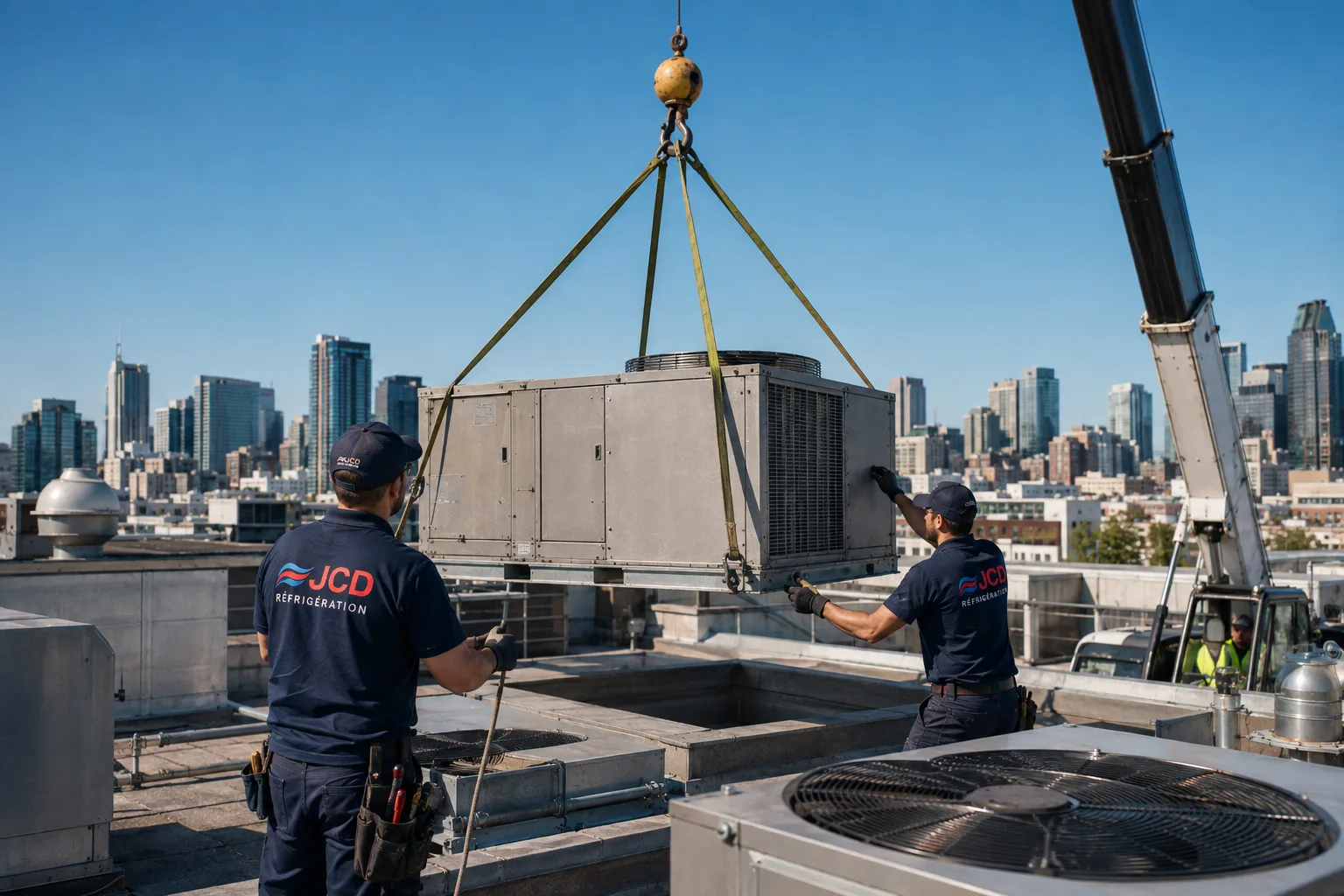
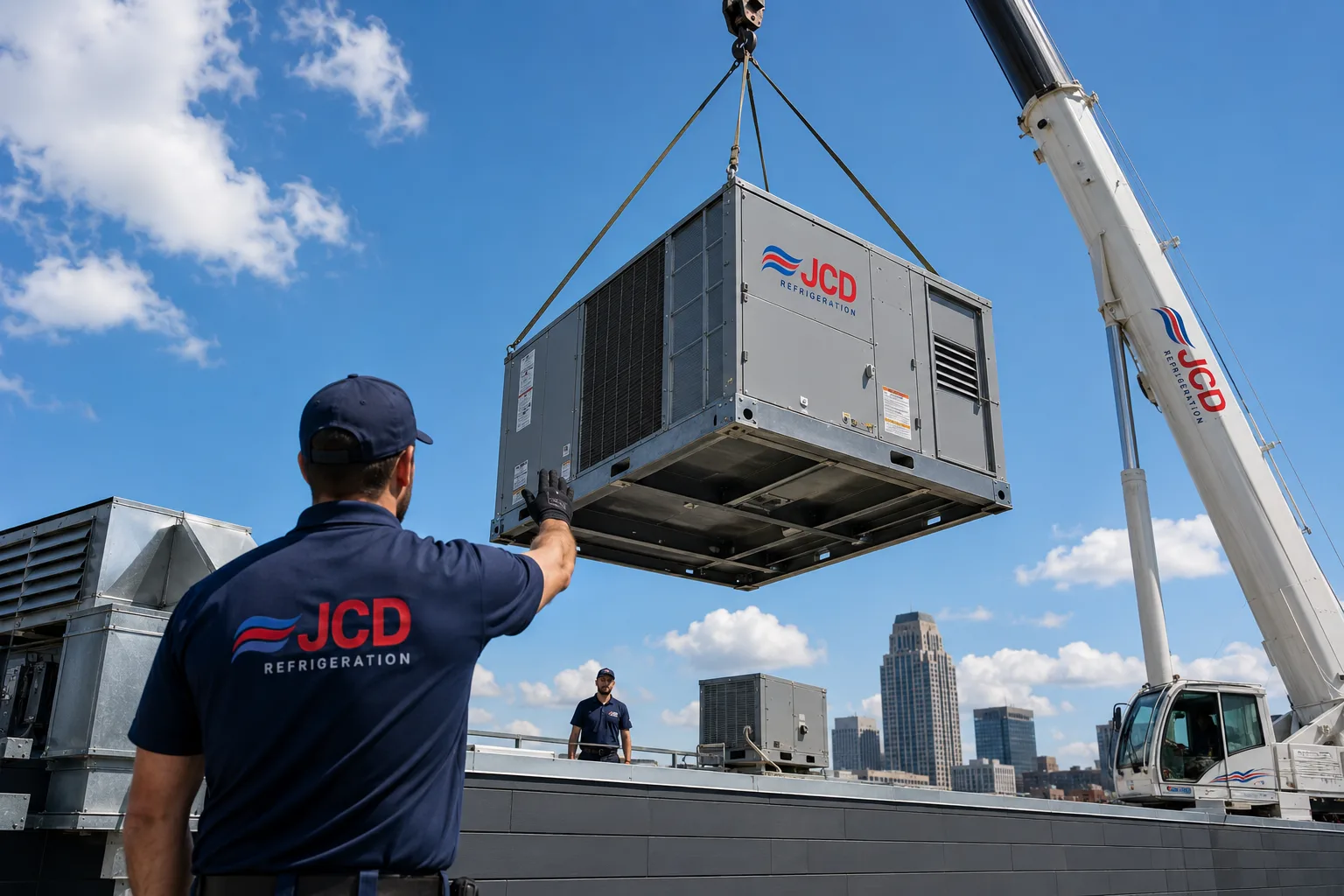
Equipment procurement, crane lifts, rigging, roofing, electrical and gas work are coordinated as required, with startup and commissioning records provided at completion.
What it costs
Montreal & West Island, 2026Assessment pricing depends on the number and type of units, site access and reporting requirements. Replacement quotes identify equipment, crane and rigging costs, controls, electrical or gas work, roofing coordination and commissioning before the project is approved.

Questions buyers ask
A per-unit condition report: age, refrigerant, remaining life, and the replacement year with a cost band. In a format you can paste into a budget.
They are what these jobs invoice at now, and we revise them yearly. A specific unit gets a firm quote when the year arrives.
No. Several clients use the report to tender the work, which is fine: a good plan survives whoever executes it.
A day for a single building, longer for a portfolio. We work around occupancy and access.
Ten years by default, with the first three costed in detail and the remainder in bands.
No. Mechanical assets only: heating, cooling and ventilation. We stay inside what we can actually inspect and stand behind.
We revise the plan and pull the year forward. Most plans hold, but a failed compressor on a 19-year-old unit changes the arithmetic.
Yes. Every completed replacement resets that asset’s age and remaining life in the next annual revision.
Project requirements, identified early
Replacement planning includes more than equipment selection. Site access, supporting trades, existing refrigerants and building requirements are reviewed before the project is scheduled.
| Requirement | What we address | Stage |
|---|---|---|
| Existing equipment | Equipment condition, capacity, refrigerant type, controls and connections documented before replacement. | Assessment |
| Refrigerant handling | Required recovery and refrigerant quantities documented by qualified technicians. | Removal and replacement |
| Site access | Roof access, crane or lift requirements, delivery restrictions and tenant considerations reviewed. | Planning |
| Trade coordination | Roofing, electrical, gas and structural requirements identified and coordinated as applicable. | Before installation |
| Approvals | Required permits or building approvals identified where they apply. | Before work begins |
| Commissioning | Startup readings, control settings and equipment information recorded and provided at completion. | Project closeout |
A complete scope before approval
The proposal identifies the equipment, supporting work, project sequence and exclusions so the building owner can approve the full scope before work begins.
 RBQ licence8108-4964-15
 CMMTQMember
 CNESSTCompliance records available