







Residential · Furnace installation
Furnace installation in Montreal and the West Island
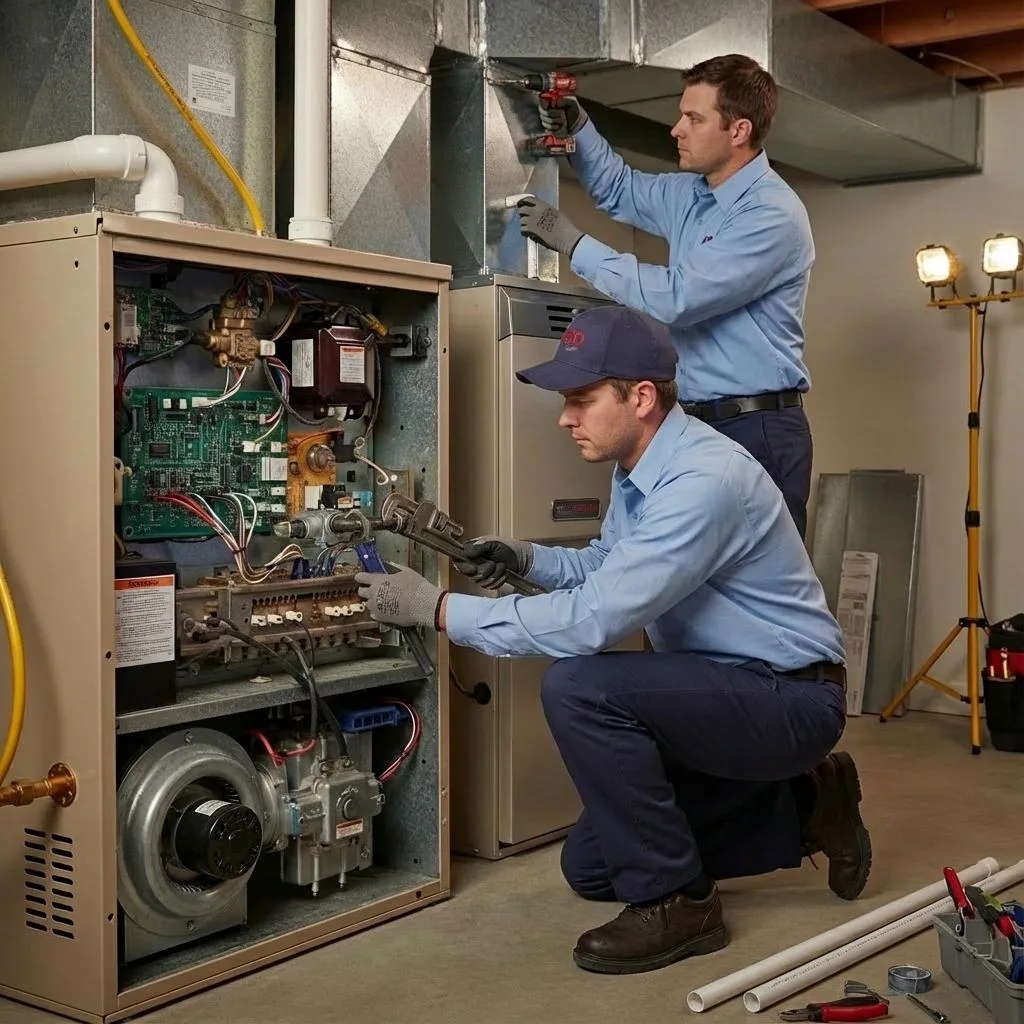
Gas and electric furnaces installed by our own licensed technicians. We assess your home and existing system, recommend equipment suited to your heating needs and budget, and provide a clear installation quote.

What to expect
- Review of your existing equipment and installation requirements
- Home assessment
- Work area protected and schedule confirmed before work begins
- Installation
- Equipment coverage explained with your quote
- Warranty
- Most standard installations
- 1 to 2 days
- Equipment selected for your home
- Gas or electric
- Installed by qualified JCD technicians
- In-house
What matters in a furnace installation
The furnace, ductwork and controls must work as one system.
From assessment to operation
The equipment and installation scope are confirmed before installation day.
- 01
Home assessment
We review the heating requirements, existing furnace, ductwork, electrical supply and gas or venting connections where applicable.
- 02
Written quote
Your quote identifies the recommended equipment, installation work, warranty and total price. Available options are presented side by side.
- 03
Installation
We protect the work area, remove the existing furnace and install the new equipment. The old unit is removed for disposal.
- 04
Testing and registration
We verify airflow, temperature rise, electrical operation and combustion where applicable. The thermostat is configured, and the warranty is registered in your name.


Typical furnace installation costs
Montreal and the West Island · Updated September 2026$5,400 to $8,200
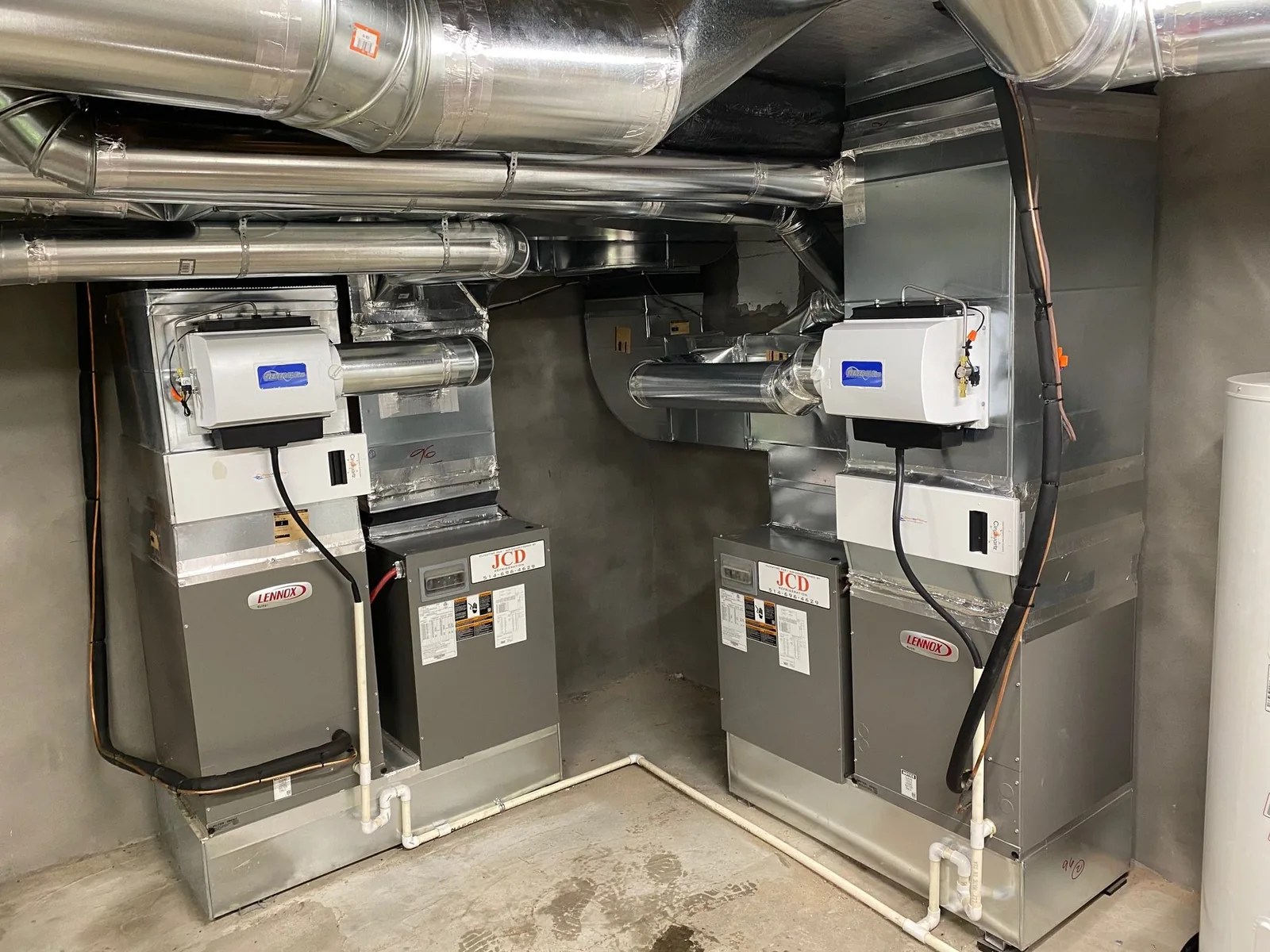
High-efficiency gas furnace, installed
$7,600 to $11,400
Modulating gas furnace with plenum modifications
$1,200 to $3,400
Return-air or ductwork corrections, when required
Prices include standard installation, venting, gas and electrical connections, removal of the existing equipment and system commissioning. Final pricing depends on furnace capacity, equipment selection, venting requirements and any necessary ductwork changes.
If you are replacing an aging gas furnace, it is worth comparing a conventional replacement with a dual-energy system. Eligible dual-energy conversions may qualify for financial assistance.
Questions we get asked
Not necessarily. We assess your home, existing equipment and comfort concerns before recommending a size. If some rooms are too cold, we also check airflow and ductwork, since a larger furnace may not solve the problem.
Yes, a gas furnace can be replaced with a gas furnace. An oil furnace cannot be replaced with another oil, natural-gas or propane appliance in affected residential buildings. The grant money also sits on the electric and dual-energy side now.
Most of one working day. In winter we stage it so the old unit runs until the new one is ready to fire, and we carry portable heat for the gap.
Permit requirements vary by municipality and the work being done. Check with your city before installation. We can provide equipment details and proposed placement information to help with your application.
Dual-energy where you already have gas, because Énergir’s rate makes it cheapest to run. Electric where there is no gas line and the panel supports it.
Rarely all of it. We measure static pressure first; usually it is a return that is undersized rather than the whole system.
96% AFUE is the practical floor on a new gas install.
Warranty coverage varies by brand and model. Many systems include a 10-year parts warranty when registered. We explain the warranty coverage included with your installation and handle the equipment registration for you.