








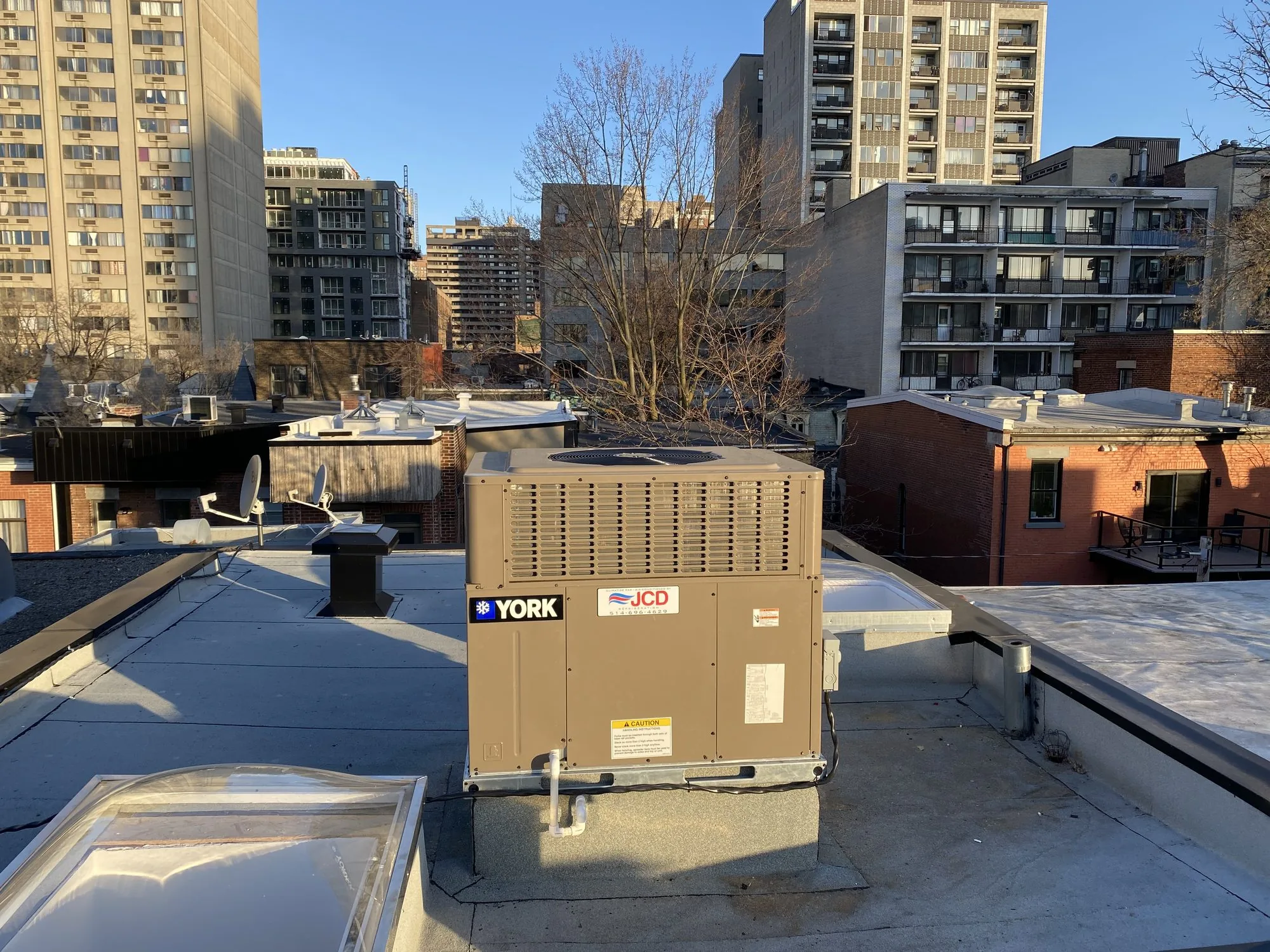
In a commercial building, heating and cooling equipment is easy to overlook until something stops working. A little planning changes that. When service visits are scheduled, equipment condition is recorded and repairs and replacements are budgeted ahead of time, the building runs more predictably and decisions are calmer.
This guide is for owners, property managers and facility teams who want a simple, workable approach to HVAC maintenance. It applies to offices, retail spaces, warehouses, multi-unit buildings and most other commercial properties.
Start with an equipment inventory
You cannot plan for what you have not listed. The first step is a clear inventory of every piece of HVAC equipment in the building. For each unit, note:
- The type of equipment, such as a rooftop unit, split system, heat pump, furnace or exhaust fan
- The make, model and serial number
- Where it is located and which part of the building it serves
- When it was installed, if you know
- Any repairs or service already on record
A walk through the building with a technician is often the quickest way to build this list, and it gives you a reference that stays useful year after year. Keep it in a shared file so that anyone managing the property can find it.
Set a schedule of service visits
Scheduled visits are the backbone of a good maintenance plan. Rather than calling only when a problem appears, you agree on a regular cycle and the equipment is checked before the seasons that put it under the most load.
A few principles help:
- Match the schedule to the equipment. Rooftop units are serviced four times a year. Other equipment is scheduled to suit its type and how it is used.
- Plan around the seasons. Cooling equipment benefits from a check in the spring, and heating equipment from a check before winter.
- Coordinate with your building. Visits are easiest when they are arranged with tenants and building staff in advance.
A maintenance agreement puts this cycle in writing, so visits happen as planned and nobody has to remember to book them. You can read more on our commercial maintenance contracts page.
Ask for service reports with photos
A visit is only as useful as what you learn from it. After each service visit, you should receive a service report that describes what was checked, what was done and anything that deserves attention. Reports that include photos make a real difference, because they show the condition of the equipment in a way that is easy to understand, even if you were not on site.
Over time, these reports become a record of how each unit is holding up. They help you to:
- See changes in condition from one visit to the next
- Discuss recommendations with your team or your owners, with pictures in hand
- Keep a clear file for each piece of equipment
Keep refrigerant records by unit
Cooling equipment uses refrigerant, and it is good practice to know what has been done on each unit. At JCD, we document refrigerant work by unit, so each piece of equipment has its own record. When you need to look back at what was done to a specific rooftop unit or split system, the information is organized in a way that makes it easy to find.
Ask any service provider how refrigerant work is recorded. A unit-by-unit record is easier to use than a general note about the building.
Track equipment condition over time
Once you have an inventory and a stream of service reports, you can start to track condition. A simple approach is to give each unit a plain status, and update it after every visit:
- Good. Operating normally, with routine maintenance only.
- Watch. Showing wear or a recurring item that the technician has flagged.
- Plan. A repair or replacement is likely to be needed, and it belongs in the budget.
This does not require special software. A spreadsheet works well. What matters is that the status changes when the reports do, so that your list reflects reality and not the way things were two years ago.
Budget for repairs and replacements
With condition tracked, budgeting becomes a matter of planning rather than reacting. Two categories are worth separating:
- Repairs and operating costs. Routine maintenance, minor repairs and the items flagged as “watch”. These belong in your annual operating budget.
- Replacements. Equipment marked “plan” belongs in a capital budget, ideally with a target season for the work. Replacing equipment on your own timeline, rather than after it stops, gives you time to compare options and schedule work at a convenient moment for the building.
Our capital planning page explains how we help owners and managers think through this kind of forecast. We can also help you review the service reports and identify which units are candidates for replacement.
Multi-unit buildings
Condominium and apartment buildings have a few extra considerations: shared equipment, individual units that may have their own systems, and boards or owners who need clear documentation to make decisions. The same approach applies, with an inventory, scheduled visits and service reports, and it is especially helpful when records need to be shared with a board or a management company. If this describes your property, see our page for condos and apartments.
What a maintenance agreement adds
For many buildings, a maintenance agreement is the simplest way to put all of this into practice. In addition to scheduled visits, service reports with photos and refrigerant records by unit, customers with a maintenance agreement receive priority service when they call.
Getting started
You do not need a complete plan to begin. A good first step is a walkthrough of your building with one of our technicians: we can help you build the equipment list, discuss a schedule and identify what to keep an eye on.
Ask for a free estimate, or call us at 514-696-4629. You can also write to us at info@jcdrefrigeration.com.
Need emergency service?
Emergency service available seven days a week. Our phones are answered every day.
514-696-4629